Isometric Landing Pages: A New Dimension in Digital Storytelling
When you land on a website that feels alive, where objects tilt at precise angles and depth pulls you into the scene, you’re likely experiencing an isometric landing page. Unlike flat designs that keep everything on a single plane, isometric design introduces a three-dimensional look without requiring a full 3D engine. It creates a sense of space and movement that invites exploration. For professionals, creators, and business owners, this approach offers a visual edge in an online world where first impressions are formed in milliseconds.
Isometric landing pages are not just a passing visual trend. They respond to a deeper shift in how people consume content. Users today expect interfaces that feel interactive and polished. A static, two-dimensional page often fails to hold attention. Isometric graphics fill that gap by providing a rich, immersive environment while remaining lightweight and relatively simple to produce. This combination of aesthetic appeal and practical performance makes them relevant for marketers, educators, freelancers, and anyone looking to make a lasting impression.
What Makes Isometric Design Stand Out
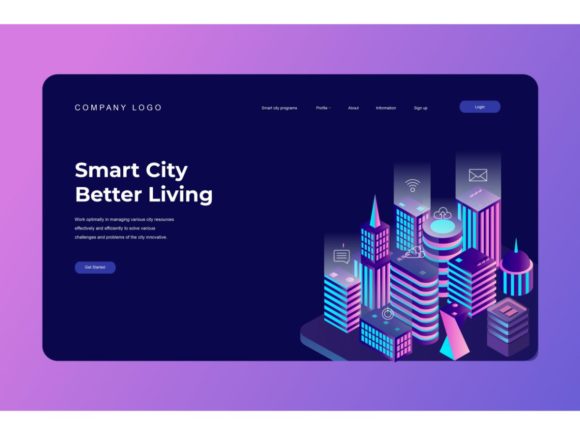
At its core, isometric design uses a fixed angle—typically 30 degrees—to project objects in three dimensions. This creates parallel lines that never converge, giving the illusion of depth without the complexity of true perspective. The result is a clean, technical look that feels modern and precise. Landing pages built with isometric elements often feature floating icons, layered product displays, or entire environments that users can scroll through as if moving through a diorama.
One of the reasons isometric design works so well on landing pages is its versatility. It can be adapted for a sleek tech startup, a creative portfolio, or an online course platform. The style communicates innovation and attention to detail without overwhelming the user. It also blends naturally with other design languages—such as minimalism or flat design—making it easier to integrate into existing brand identities.
Why Businesses and Creators Are Embracing Isometric Landing Pages
The move toward isometric landing pages reflects broader changes in user expectations and market preferences. People are tired of generic templates. They want to see personality and effort in the websites they visit. For a business owner launching a product, a custom isometric illustration can convey the value proposition in a way that text alone cannot. For a freelancer or blogger, an isometric header can signal creativity and technical skill before a single word is read.
Social media and design platforms have also popularized this style. As creators share more isometric work on Dribbble, Behance, and Instagram, the demand grows among brands who want to stand out. The shift is not just about aesthetics, though. Isometric landing pages often improve storytelling. By placing elements in a spatial context, you can guide a visitor’s eye through a narrative—starting with the hero section, moving to features, and ending with a call to action—all within a cohesive, visually engaging world.
The Evolution from Flat to Isometric
For years, flat design dominated the web because it loaded fast and worked across devices. Isometric design emerged as a natural evolution, adding depth without abandoning the principles of clarity and responsiveness. Early attempts at 3D on the web were clunky, relying on heavy plugins or slow rendering. Today, CSS transforms, SVG illustrations, and lightweight JavaScript libraries make isometric graphics smooth and accessible.
This evolution mirrors changes in modern workflows. Designers can now create isometric assets in tools like Figma, Illustrator, or Blender and export them as SVG or PNG with minimal performance cost. Developers can animate these assets using simple CSS transitions. The barrier to entry is lower than ever, which explains why more professionals are experimenting with isometric landing pages for client projects or personal brands.
Practical Considerations for Building Your Own Isometric Landing Page
If you’re considering an isometric landing page for your next project, there are several practical steps to keep in mind. First, define the purpose of the page. Isometric elements should support your message, not distract from it. For example, a product launch might benefit from a 3D-like render of the item rotating as the user scrolls. A service-based business might use an isometric cityscape to represent their market reach.
Second, prioritize performance. While isometric graphics are generally lightweight, overly complex scenes can still slow load times. Use vector formats where possible, and limit the number of animated objects. A good rule is to keep the main visual focal point in isometric style while leaving supporting elements more subdued. This balances impact with usability.
Third, ensure accessibility. Isometric design can sometimes make text or buttons harder to read if the background is busy. Maintain strong contrast, use clear typography, and include alt text for all visual elements. These steps are essential for reaching a broader audience and meeting SEO best practices.
Tools and Techniques to Get Started
- Vector illustration tools like Adobe Illustrator or Affinity Designer are ideal for creating isometric icons and objects from scratch.
- Isometric grid generators help maintain consistent angles, saving time during the design phase.
- Figma plugins such as Isometric or 3D Transform allow rapid prototyping of isometric layouts directly in your design system.
- CSS 3D transforms can be used to apply subtle isometric effects to existing elements, such as buttons or cards.
- No-code platforms like Webflow or Framer now support isometric assets out of the box, making the approach accessible for entrepreneurs without a development background.
Even hobbyists can experiment with free resources like isometric illustration packs or online editors that produce isometric scenes in minutes. The key is to start small and test the impact on user engagement through A/B testing or heatmaps.
Integrating Isometric Design with Modern Workflows
Today’s workflow demands flexibility. A marketer might need to update a landing page quickly without waiting on a designer. Isometric landing pages built with SVG or CSS allow for easier revisions than a fully rendered 3D scene. You can swap colors, adjust positions, or hide elements with simple code changes. This agility is crucial in fast-moving campaigns or when iterating on product messaging.
From an SEO perspective, isometric pages can be optimized just like any other landing page. Use descriptive file names and alt tags for every image. Ensure that the page’s HTML structure remains semantic—headings, paragraphs, and lists should carry the content load, with visuals serving as enhancement. Search engines cannot interpret isometric depth, but they can read the underlying content if it is well structured.
Balancing Creativity and Conversion
A common concern is whether elaborate design hurts conversion rates. In practice, isometric landing pages often boost engagement when executed thoughtfully. The visual novelty encourages longer dwell time, and the guided eye flow can increase click-through rates on calls to action. However, the design must not come at the cost of clarity. Place CTAs in obvious locations, use contrasting colors, and keep the primary action prominent even within a complex scene.
For example, a SaaS company might show an isometric dashboard with floating data points. As the user scrolls, a button reading “Start Free Trial” could appear overlaid on the scene, anchored to a specific object. That kind of integration feels organic rather than obtrusive, supporting both creativity and conversion.
Grounding the Trend in Reality
Isometric landing pages are not a replacement for all design approaches, nor are they suitable for every industry. A law firm or financial institution may find that a more traditional layout better communicates trust and stability. But for creative fields, tech products, educational platforms, and e-learning experiences, the isometric style offers a compelling way to differentiate.
The trend also aligns with a broader push toward visual storytelling across the web. As attention spans shrink, the need for immediate, intuitive communication grows. Isometric landing pages meet that need by creating visual narratives that are easy to scan and memorable. They fit naturally into a forward-looking but realistic design strategy, one that prioritizes both innovation and usability.
If you are a blogger wanting to elevate your personal brand, a marketer planning a product launch, or an educator creating an online course, consider how an isometric landing page might capture your audience’s imagination. Start with a single illustration, test it, and build from there. The results may surprise you.