3D Magnetic Icon Design: A New Direction in Visual Communication
In a digital landscape where users scroll past hundreds of visual elements each day, the pressure to create something that stops the thumb has never been higher. Among the many design innovations gaining traction, 3D magnetic icon design has emerged as a distinctive approach that blends tactile realism with digital flexibility. It is not merely a stylistic choice but a response to how people interact with interfaces, brands, and content in an increasingly immersive world.
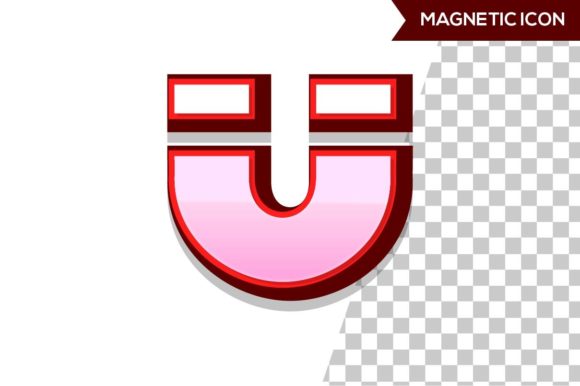
At its core, 3D magnetic icon design refers to icons rendered with three-dimensional depth and shading, often incorporating a visual or conceptual "magnetic" quality that suggests attraction, alignment, or connection. These icons appear to pull elements together, creating a sense of cohesion and intentionality that flat or even standard 3D icons sometimes lack. The result is a visual language that feels both modern and grounded, futuristic yet familiar.
Why 3D Magnetic Icon Design Matters Now
The timing of this trend is not coincidental. Over the past few years, user interfaces have progressed through phases of skeuomorphism, flat design, material design, and neumorphism. Each era responded to a specific set of technological capabilities and user expectations. What makes 3D magnetic icon design relevant today is its ability to bridge the gap between visual appeal and functional clarity.
Modern users are sophisticated. They have grown accustomed to fast-loading apps, seamless animations, and intuitive navigation. But they also crave surfaces that feel responsive, almost alive. Magnetic icon design satisfies this craving without overwhelming the user. The subtle suggestion of attraction or pull mimics real-world physics in a way that feels intuitive rather than gimmicky.
For businesses, this translates into higher engagement. Icons that appear to draw the eye or connect related actions can reduce cognitive load. When a user opens a dashboard and sees a series of 3D magnetic icons that seem to align naturally, they are more likely to understand the hierarchy of actions without reading a single label. This is not about decoration — it is about communication.
The Shift from Flat to Dimensional Thinking
To understand why this style is gaining momentum, it helps to look at the broader arc of design philosophy. Flat design dominated for years because it prioritized speed and simplicity. It removed unnecessary ornamentation and made interfaces cleaner. But flat design also introduced a problem: it could feel cold or impersonal. Users began to miss the visual cues that came from depth, shadow, and texture.
3D magnetic icon design reintroduces those cues but in a controlled, purposeful way. Unlike the heavy skeuomorphism of the early 2010s, which tried to replicate physical objects entirely, this approach uses depth strategically. The magnetic effect suggests connection without mimicking a specific real-world object. This makes it versatile across industries — from fintech apps to creative portfolios.
Designers are also benefiting from better tools. Software like Spline, Cinema 4D, and Blender have made 3D icon creation more accessible than ever. What once required a team of specialists can now be accomplished by a single designer with a solid understanding of lighting, materials, and composition. This democratization has accelerated adoption.
How 3D Magnetic Icon Design Aligns with User Expectations
User expectations have shifted dramatically in the past decade. People no longer judge a website or app solely by its content. They judge it by how it feels to navigate. Micro-interactions, loading animations, and iconography all contribute to the overall experience. A well-designed 3D magnetic icon can convey trust, precision, and innovation in a fraction of a second.
Consider a scenario where a user opens a project management tool. The icons for tasks, files, and team members appear as small 3D shapes that seem to hover just above the surface. When the user hovers over an icon, it subtly shifts, as though drawn toward the cursor. This is not just pleasing — it provides feedback. The user knows the element is interactive before they click. This type of feedback reduces errors and increases confidence, especially for users who may not be tech-savvy.
For entrepreneurs and business owners, this translates into better user retention. A study of user behavior consistently shows that people form an opinion about a digital product within seconds. Visual polish matters. Icons that feel magnetic create a sense of quality that extends to the brand itself. It signals that the company pays attention to details.
Practical Applications Across Different Fields
One of the strengths of 3D magnetic icon design is its adaptability. In marketing, these icons can be used to guide the eye toward a call-to-action. The magnetic quality draws attention naturally, without the need for flashy animations or aggressive colors. In educational platforms, they can represent concepts like connection, attraction, or alignment, making abstract ideas more concrete.
Freelancers and creators also find value in this style. A portfolio that uses cohesive 3D magnetic icons can stand out in a crowded market. Clients often look for designers who demonstrate both technical skill and conceptual thinking. Using this icon style shows an understanding of current trends without being derivative.
For bloggers and content creators, these icons can serve as visual anchors in long-form articles. Instead of generic stock icons, a set of custom 3D magnetic icons can reinforce the tone of the content. They also perform well on social media, where visual distinctiveness is critical for engagement.
The Evolution of Icon Design: From Static to Dynamic
Icon design has come a long way. Early digital icons were pixel-based and utilitarian. They served a functional purpose but rarely inspired emotion. As screens improved, designers began experimenting with gradients, shadows, and eventually full 3D rendering. Each iteration added a layer of richness, but also complexity.
3D magnetic icon design represents a maturation of this evolution. It does not try to be flashy for the sake of it. Instead, it uses three-dimensionality to enhance meaning. The "magnetic" aspect is not just a visual trick — it reflects how users actually think. People naturally group related items. Icons that appear to attract each other mirror this cognitive process.
This approach also takes advantage of modern rendering capabilities without sacrificing performance. Lightweight 3D assets can be optimized for web and mobile use. Designers can export icons in formats that maintain depth and shadow while keeping file sizes small. This means the visual benefits do not come at the cost of loading speed.
What Makes a 3D Magnetic Icon Effective
Not every 3D icon qualifies as magnetic. The effect requires deliberate design choices. First, there is the use of gradient lighting that suggests a single light source, creating consistency across a set of icons. Second, the shapes often include rounded edges and soft transitions, which feel more inviting than sharp angles. Third, the icon should have a sense of weight or presence, as though it exists in a space that extends beyond the screen.
Color palettes also play a role. Magnetic icons often use saturated hues that appear to glow or reflect light. Complementary colors can enhance the sense of attraction between elements. When a set of icons uses a cohesive palette, the magnetic effect extends across the entire interface, making the design feel unified.
From a practical standpoint, designers should test their icons at multiple sizes. A magnetic effect that looks striking on a desktop monitor might lose its impact on a watch face or a mobile notification. The best 3D magnetic icon designs scale gracefully, preserving their visual logic across contexts.
Recommendations for Adopting 3D Magnetic Icon Design
If you are considering integrating this style into your work, start by auditing your current iconography. Ask yourself what each icon communicates beyond its literal meaning. If the answer is limited to basic identification, there is room to add depth. Begin with a single set of icons — for a landing page or a key feature — and test the response.
Collaboration between designers and developers is essential. Early conversations about rendering methods, hover states, and responsive behavior will prevent technical headaches later. Prototyping tools like Figma and Framer now support 3D layers, making it easier to iterate before committing to final assets.
For business owners and marketers, consider how 3D magnetic icon design aligns with your brand voice. If your brand is playful and innovative, this style can amplify that identity. If your brand is more conservative, use the approach sparingly — perhaps for hero sections or key interactive elements rather than across the entire interface.
Looking Ahead Without Hype
No design trend lasts forever. What makes 3D magnetic icon design worth paying attention to is not its novelty but its utility. It solves a real problem: how to make digital interfaces feel more human without sacrificing clarity. As augmented reality, spatial computing, and mixed reality evolve, the principles behind magnetic design will likely translate well into those environments.
For now, the most practical takeaway is to think of icons not as static symbols but as active participants in the user experience. When an icon can suggest movement, connection, or attraction, it does more than label a function — it tells a story. That is the core value of 3D magnetic icon design. It turns a small visual element into a meaningful interaction.
Whether you are a designer polishing a portfolio, a business owner refining a product, or a marketer crafting a campaign, this approach offers a way to communicate with subtlety and precision. It respects the user's intelligence while rewarding their attention. And in a world full of noise, that kind of respect is magnetic in its own right.