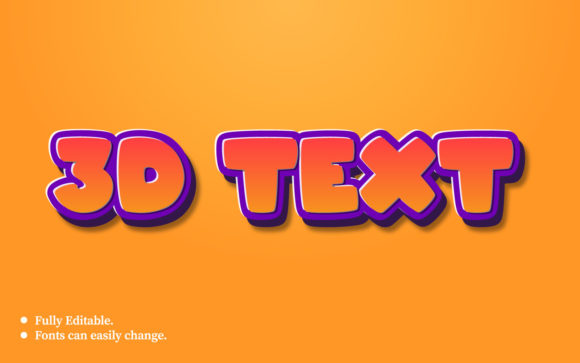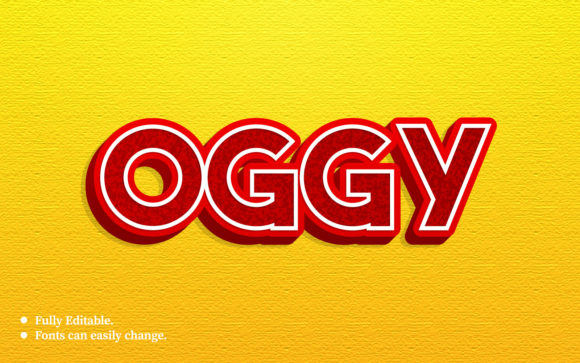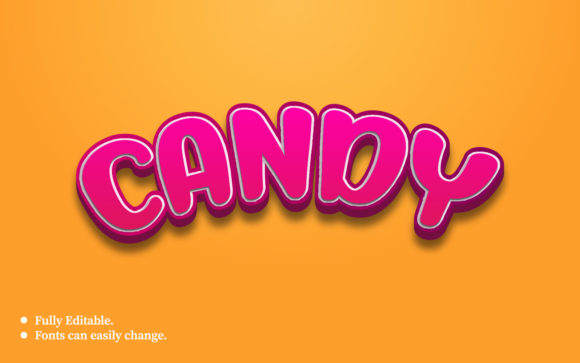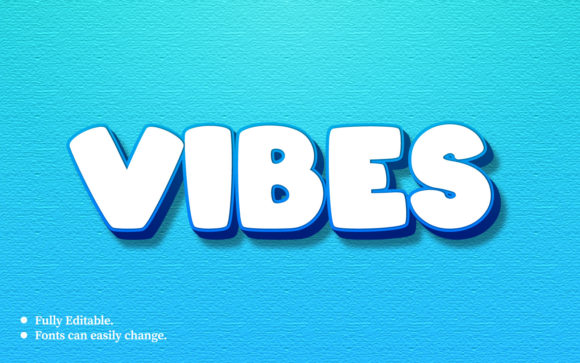
Bringing Depth to Typography: Mastering the Vibes 3D Text Effect Design Template
Typography has always been a cornerstone of visual communication, but in an era saturated with flat design and minimalism, standing out demands something more. The Vibes 3D Text Effect Design Template offers creators a powerful way to reintroduce depth, texture, and dimensionality into their work without starting from scratch. Whether you are a seasoned graphic designer, a social media content creator, or a business owner looking to elevate your brand materials, understanding how to leverage this template can transform your approach to text-based visuals.
What Defines the Vibes 3D Text Effect Design Template?
At its core, this template is a pre-configured set of layer styles, shading parameters, and lighting effects that simulate three-dimensional typography. Unlike manually extruding text in a 3D modeling application, the Vibes 3D Text Effect Design Template works within popular graphic design software to produce convincing depth effects with editable layers. The result is text that appears to pop off the page or screen, catching ambient light and casting realistic shadows.
The template typically includes multiple adjustable components:
- Bevel and extrude settings that control the thickness and angle of the 3D effect
- Lighting presets that simulate directional light sources for natural highlights
- Shadow mapping to create drop shadows or ground-plane reflections
- Texture overlays that add surface grain, gloss, or metallic sheen
- Color gradient maps that transition hues across the depth of the letters
What makes this particular template notable is its balance between complexity and usability. It provides enough parameters to achieve a professional-grade result while remaining accessible to users who may not have extensive experience with 3D rendering workflows.
Understanding the Layered Architecture
To fully harness the Vibes 3D Text Effect Design Template, it helps to understand how the layers interact. Most implementations use a stack of at least five to seven adjustment layers that build the illusion of depth incrementally. The base layer holds the original text. Above it, an extrusion layer simulates the sides of the letters. A highlight layer adds specular reflections where light would naturally strike. A shadow layer handles ambient occlusion and contact shadows. Finally, a reflection layer can simulate glossy surfaces or floor reflections.
This modular structure means you can tweak individual layers without rebuilding the entire effect. If the shadow feels too harsh, you adjust only that layer. If you want a matte finish instead of gloss, you modify the highlight layer. This non-destructive workflow is one of the strongest advantages of using a template rather than applying a one-click filter.
Practical Applications Across Industries
The versatility of the Vibes 3D Text Effect Design Template makes it suitable for a surprisingly wide range of use cases. Its real value becomes apparent when you consider the different contexts where dimensional text can enhance communication.
Brand Identity and Logo Presentation
For business owners and brand managers, first impressions often hinge on how a logo or wordmark is presented. A flat logo can feel dated or low-effort, while a properly executed 3D treatment suggests polish and investment. Using the template, you can create hero versions of your brand name for website headers, trade show signage, or video intros. The dimensionality adds a tactile quality that makes the brand feel more substantial.
Consider a tech startup launching a new product. A 3D-rendered logo on the landing page can convey innovation and forward-thinking design. The Vibes 3D Text Effect Design Template allows them to achieve this look without hiring a 3D artist or spending hours in specialized rendering software.
Social Media Content and Thumbnails
Content creators on platforms like YouTube, Instagram, and TikTok face intense competition for attention. Thumbnails with flat text often get lost in feeds filled with bold visuals. Adding depth to headline text using the template can dramatically improve click-through rates. The 3D effect creates a sense of importance and urgency, making viewers feel the text is worth their attention.
For example, a gaming channel using the template for episode titles can make the text look like it is carved from stone or molded from metal, aligning with the aesthetic of the game. A finance educator might use a sleek chrome effect to convey professionalism and precision. The template can be adapted to match any brand personality simply by adjusting the color palette and texture settings.
Print Materials and Packaging
Although the template originates in digital design, its outputs translate well to print. Brochures, posters, product packaging, and book covers all benefit from dimensional typography. When used thoughtfully, a 3D text effect can make a headline feel embossed or debossed, adding perceived value to the physical item. Print designers can use the template to mock up concepts before sending files to production, saving time and reducing revisions.
One observation from print workflows is that the template's shadow settings often need adjustment for CMYK output. Highlights that look natural on screen may appear too intense when printed. Fortunately, the adjustable nature of the Vibes 3D Text Effect Design Template makes it straightforward to dial back specular intensity for physical media.
User Profiles: Who Benefits Most?
The template design caters to several distinct user groups, each with unique needs and skill levels.
The Hobbyist Explorer
For someone learning design as a hobby, the template serves as both a learning tool and a time-saver. By exploring how each layer contributes to the final effect, a beginner gains insight into lighting theory, material simulation, and layer composition. The satisfaction of producing a professional-looking result early in the learning process provides motivation to continue developing skills. Many hobbyists find that tweaking the template teaches them more about 3D text effects than watching abstract tutorials.
The Freelance Designer
Freelancers working with multiple clients face constant pressure to deliver high-quality work quickly. The Vibes 3D Text Effect Design Template becomes a reliable asset in their toolkit. Instead of rebuilding a 3D text effect from scratch for every project, they can start with the template and customize it to match the client's brand guidelines. This efficiency allows them to take on more projects or spend additional time on creative strategy.
A freelance designer might use the template for a client's event poster one week, then repurpose it with different colors and textures for a client's social media campaign the next. The template's flexibility makes it a recurring resource rather than a one-time solution.
The Marketing Professional
In-house marketers often need to produce assets rapidly without access to dedicated design teams. A template that simplifies a complex effect empowers marketers to create polished visuals independently. Campaign landing pages, email headers, and presentation slides can all feature consistent, high-quality 3D typography. This independence reduces bottlenecks and speeds up campaign execution.
One advantage for marketing teams is the template's compatibility with brand style guides. By locking in specific color values and material settings, the team can ensure every piece of content adheres to brand standards while still benefiting from the 3D effect.
Technical Considerations for Optimal Results
Achieving the best outcome with the Vibes 3D Text Effect Design Template requires attention to a few technical details that users sometimes overlook.
Resolution and Scaling
The template is typically designed at a specific base resolution. Scaling text too far beyond that resolution can introduce artifacts or degrade the quality of the bevel and extrusion layers. It is advisable to work at the template's native resolution or scale down rather than up. If you need extremely large output, consider recreating the effect at the target resolution using the template's layer structure as a reference.
Font Selection Matters
Not every typeface responds well to 3D extrusion. Thin or delicate fonts may lose legibility when depth is added, as the sides of the letters become as visible as the faces. Bold, geometric fonts with consistent stroke widths tend to produce the most convincing results. The template's settings often include a recommended font weight range, but experimenting with different typefaces can yield interesting variations.
For instance, a heavy sans-serif font like Montserrat or Bebas Neue extrudes cleanly, while a script font with fine swashes may produce messy intersections. Users working with script fonts may need to simplify the letterforms or increase the bevel size to compensate.
Lighting Consistency
The template includes multiple lighting presets, but the chosen preset must match the context where the text will appear. If the text is placed on a background with a strong directional light source, the template's lighting angle should align with that source. Inconsistency between the text lighting and background lighting breaks the illusion. The template usually allows you to rotate the light angle freely, making alignment straightforward.
A practical observation is that neutral lighting from the upper left tends to work across the widest range of contexts. This classic lighting position mimics natural top-down illumination and feels familiar to viewers.
Workflow Integration and Customization
Integrating the Vibes 3D Text Effect Design Template into an existing workflow is generally seamless, but a few strategies can maximize its value.
Building a Library of Variations
Once you have customized the template for a specific project, save that variation as a separate preset file. Over time, you will accumulate a library of materials: chrome, brushed metal, matte plastic, frosted glass, and more. Each variation becomes instantly applicable to future projects with minimal adjustment. Maintaining this library turns the template into a scalable resource that grows in value the more you use it.
Combining with Other Effects
Dimensional text does not have to stand alone. The template integrates well with additional design elements like particle overlays, gradient backgrounds, and motion blur. For video projects, animating the light source or extrusion depth creates a dynamic reveal effect that captures viewer attention. Combining the 3D text with subtle parallax motion adds an extra layer of professionalism.
One combination that works particularly well is pairing the template with a glass morphism background. The contrast between the solid, textured 3D text and the translucent, blurry background creates a striking visual hierarchy.
Collaborative Workflows
In team environments, the template's layer-based structure makes it easy to hand off projects. One designer can set up the base effect, and another can adjust colors or textures without needing to understand the entire build. Clear layer naming conventions within the template support this collaborative approach. Teams using version control systems for design files can track changes to individual layers over time.
Future Trends and Evolving Expectations
As display technology improves and audiences become more visually sophisticated, the demand for dimensional typography will likely grow. Augmented reality interfaces, holographic displays, and immersive web experiences all benefit from text that has physical presence. The Vibes 3D Text Effect Design Template occupies an interesting position in this landscape—it bridges the gap between purely flat design and full 3D rendering.
We are already seeing a shift away from ultra-minimal flat design toward a more tactile, material-rich aesthetic. Major brands are reintroducing gradients, shadows, and textures into their visual identities. The template aligns with this trend by offering a controlled way to reintroduce depth without going full photorealism.
Another development is the growing expectation for dynamic content that responds to user interaction. The template's layered structure can be adapted for interactive environments where the text rotates or shifts in response to mouse movement. This kind of micro-interaction delights users and increases engagement. While the template itself is static, the principles it teaches about depth and lighting apply directly to interactive 3D text implementations.
Common Pitfalls and How to Avoid Them
Even with a well-designed template, users sometimes encounter issues that diminish the quality of their output.
Overprocessing
The most common mistake is applying too many effects simultaneously. The template already provides a substantial 3D effect. Adding bevels, glows, strokes, and drop shadows on top of it can create visual clutter and reduce legibility. A good rule is to use the template's built-in effects as the primary visual treatment and limit additional effects to one or two subtle accents.
Ignoring Background Contrast
Dimensional text relies on contrast to read clearly. Placing 3D text on a busy or similarly colored background can wash out the effect. The template works best when the background provides sufficient contrast—either in brightness, hue, or texture. If you must place text on a complex background, consider adding a subtle shadow or glow behind the text to separate it visually.
Neglecting Mobile Rendering
On small screens, intricate 3D details may be too small to perceive. The bevels and highlights that look stunning on a desktop monitor may disappear on a phone display. Testing the output at mobile resolution is essential. Sometimes simplifying the effect—using a shallower extrusion or bolder lighting—improves legibility on small screens without sacrificing the overall 3D impression.
Users who keep these considerations in mind will consistently produce results that look intentional and polished rather than overdone.
Summing Up the Value
The Vibes 3D Text Effect Design Template is more than a shortcut—it is a structured system for understanding and applying dimensional typography. Its value lies in the balance it strikes between creative flexibility and production efficiency. Whether you are creating a single social media graphic or building a comprehensive brand identity, the template provides a reliable foundation that can be adapted to countless contexts.
By learning how each layer functions, experimenting with materials, and integrating the template into a consistent workflow, designers at any skill level can produce text that commands attention and communicates depth—both literally and figuratively. In a visual landscape where standing out is increasingly difficult, adding the right kind of depth can make all the difference.