The Complete Guide to 3D Mandala SVG Design Files: Art, Technology, and Creative Expression
In recent years, the intersection of traditional art and digital design has produced some of the most visually striking creative tools available to modern makers, crafters, and designers. Among these, the 3D Mandala SVG Design File stands out as a fascinating fusion of ancient symbolism and cutting-edge vector graphics. Whether you are a hobbyist exploring new creative outlets, a small business owner looking to diversify your product line, or a seasoned designer seeking fresh inspiration, understanding what 3D Mandala SVG files are and how they work can open up a world of possibilities. This guide will take you from the very basics to advanced applications, helping you grasp not only the technical aspects but also the deeper significance and practical relevance of these remarkable designs.
What Is a 3D Mandala SVG Design File?
At its core, a 3D Mandala SVG Design File is a digital vector graphic that combines two distinct elements: the mandala, a geometric configuration of symbols that has spiritual and ritual significance in many cultures, and the three-dimensional illusion created through shading, layering, and perspective. SVG, which stands for Scalable Vector Graphics, is a widely used file format that allows images to be scaled infinitely without losing quality. When you bring these three concepts together, you get a design file that can be scaled to any size—from a tiny sticker to a massive wall mural—while retaining crisp lines and intricate detail.
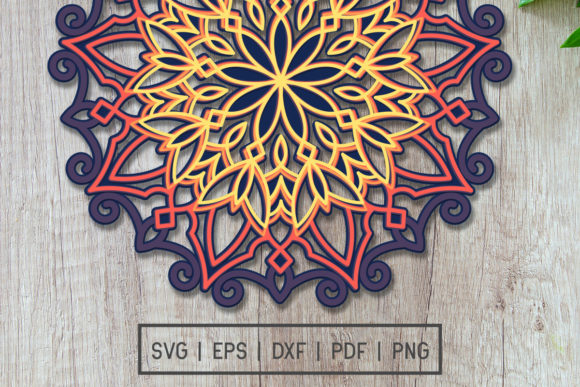
The "3D" aspect of these designs is achieved through careful manipulation of gradients, shadows, and overlapping elements. Unlike a flat mandala, which sits on a single visual plane, a 3D mandala creates the illusion of depth, making some parts appear to rise toward the viewer while others recede. This effect can range from subtle embossing to dramatic, multi-layered depth that almost feels tactile.
How SVG Technology Makes 3D Mandalas Possible
SVG files are written in XML, a markup language that describes the shapes, colors, and positions of elements within an image. Because SVG files are code-based rather than pixel-based, they can be edited, resized, and manipulated with precision. For a 3D mandala, this means that each concentric ring, each petal-like shape, and each drop shadow can be individually adjusted. Designers can use SVG attributes such as transform, opacity, and gradient to build the illusion of depth. The result is a file that is not only visually stunning but also highly functional for a wide range of applications, from laser cutting to print design.
The Purpose and Significance of 3D Mandala Designs
To fully appreciate the 3D Mandala SVG design file, it helps to understand why mandalas themselves have endured for centuries. Mandalas, which means "circle" in Sanskrit, have been used in Hinduism, Buddhism, and other spiritual traditions as tools for meditation, symbols of the universe, and representations of wholeness. The circular structure draws the eye inward, promoting focus and a sense of calm. Adding a three-dimensional dimension to this ancient form does more than just make it look modern—it deepens the visual experience. The layers and depth can mirror the complexity of the mind or the universe, inviting the viewer to explore not just a design but a journey.
In a modern context, these designs serve both aesthetic and functional purposes. They bring a sense of order and beauty to digital and physical spaces, and their repetitive, symmetrical nature can be deeply satisfying to both create and behold. For businesses, they offer a way to stand out with products that feel premium and thoughtfully designed.
Practical Applications Across Modern Life
The versatility of the 3D Mandala SVG Design File is one of its greatest strengths. Here are some of the most popular and impactful ways they are used today:
Laser Cutting and Engraving
Laser cutters and engravers work perfectly with SVG files because the format directly translates into cutting paths. A 3D mandala SVG can be used to create intricate wooden wall art, acrylic jewelry, leather accessories, or even cake toppers. The 3D effect is especially striking when layers of material are stacked or when the laser engraves different depths into a single surface, creating a tactile, dimensional piece.
Print-on-Demand and Merchandise
For entrepreneurs in the print-on-demand space, 3D mandala designs are a goldmine. They can be printed on t-shirts, hoodies, phone cases, pillows, and home decor items. The depth and detail of the design make products look high-end and eye-catching. Because SVG files scale infinitely, a single design can be adapted for a tiny sticker or a large duvet cover without any loss of quality.
Digital Art and NFTs
Digital artists and collectors have embraced 3D mandala SVGs as standalone art pieces or as components in larger compositions. The files can be animated, colored with custom palettes, or combined with other elements in software like Adobe Illustrator, Inkscape, or Blender. In the realm of NFTs, unique 3D mandala designs have found appreciative audiences who value their meditative quality and visual complexity.
Education and Mindfulness
Teachers and therapists use mandala coloring activities to help students and clients focus, relax, and express themselves. With a 3D SVG file, these coloring pages become more engaging because the shading and depth provide natural guides for color selection and shading practice. Some educators even use the files to teach geometry and symmetry, as the mandala's structure offers a practical example of mathematical principles.
Home and Event Decor
From wedding invitations to wall decals, 3D mandala SVGs add a touch of elegance and sophistication. The designs can be scaled and printed on vinyl, cardstock, or fabric, making them suitable for banners, table centerpieces, and even window clings that cast beautiful shadow patterns when light passes through them.
Common Misunderstandings and Clarifications
As with any popular creative tool, several misconceptions surround 3D Mandala SVG Design Files. Let us address them directly:
- "Any mandala SVG is automatically 3D." Not true. A 3D mandala is specifically designed with shading, overlapping layers, and perspective to create depth. A flat mandala, while beautiful, lacks these dimensional cues.
- "You need expensive software to use them." While professional tools like Adobe Illustrator offer advanced editing capabilities, many free programs like Inkscape, Vectr, or even Cricut Design Space can open and manipulate SVG files. The format is remarkably accessible.
- "3D mandalas are only for experts." On the contrary, many 3D mandala SVG files are sold as ready-to-use products. Beginners can download, customize colors, and use them immediately without any design skills. The file format handles the complexity behind the scenes.
- "The 3D effect will be lost when printed or cut." This depends on the application. For laser engraving, the depth is physically realized. For print, proper color management and quality paper ensure the illusion of depth remains striking. Shrink-to-fit uses like stickers may lose subtlety, but large-format prints retain the effect beautifully.
How to Choose and Use a 3D Mandala SVG File
If you are ready to incorporate 3D mandala SVG designs into your work or hobby, here is a practical step-by-step approach:
- Identify your application. Are you printing on fabric, cutting wood, or displaying on a screen? Different uses may require different levels of detail. For laser cutting, simpler, more geometric designs often work best. For print, highly detailed, gradient-rich files shine.
- Check compatibility. Ensure your software or machine accepts SVG files. Most modern design and cutting software do, but it is always worth verifying. Some files may also come in AI, EPS, or DXF formats alongside SVG.
- Test the scale. Because SVG files are scalable, always test how the design looks at your desired output size. A design that looks perfect as a 4-inch sticker may need adjustments for a 3-foot poster. Preview in your software before committing to production.
- Customize when needed. One of the joys of SVG files is that you can change colors, remove or add elements, and combine multiple designs. Use layers in your vector software to isolate parts of the mandala and experiment freely.
- Respect licensing. If you are using a design for commercial purposes—selling products or incorporating it into merchandise—check the license agreement that comes with the file. Many designers offer commercial use licenses for a small additional fee.
Benefits for Different Audiences
The 3D Mandala SVG Design File is not a one-size-fits-all tool; it offers distinct advantages depending on who you are:
- For crafters and hobbyists: These files provide a shortcut to creating professional-looking projects without needing advanced drawing skills. You can focus on assembly, finishing, and personalizing rather than designing from scratch.
- For small business owners: A well-chosen 3D mandala design can become the signature element of your product line. It conveys sophistication and care, which can justify higher price points and attract customers seeking unique items.
- For educators: Using these designs in the classroom bridges art, math, and technology. Students learn about geometry, symmetry, and digital file formats while engaging in a calming, creative activity.
- For graphic designers: 3D mandala SVGs can serve as building blocks for larger compositions, backgrounds, or pattern fills. They offer a shortcut to complex, intricate elements that would take hours to draw manually.
- For therapists and wellness practitioners: Mandala coloring is a well-known mindfulness practice. The 3D versions add an extra layer of engagement, as users must consider light, shadow, and depth when choosing colors.
Technical Considerations for Beginners
If you are new to working with SVG files, here are a few technical points to keep in mind. First, always unzip the folder if your purchased design comes in a compressed format. Inside, you will usually find the SVG file along with a license document and perhaps preview images. Second, be aware that some SVG files are coded as "responsive," meaning they will scale to fit their container. This is excellent for web use but may require adjustment when importing into design software that expects a fixed size. Finally, understand the difference between an SVG and a raster image. SVGs are composed of paths and shapes, while raster images like JPEGs or PNGs are made of pixels. You cannot convert a low-resolution raster image into a high-quality SVG without retracing or vectorizing it, which may lose detail. For best results, always start with a genuine SVG file.
Future Trends and Creative Directions
The popularity of 3D Mandala SVG Design Files shows no signs of slowing down. As more creators enter the digital design space, we are seeing innovations such as animated mandalas with rotating layers, interactive mandalas that respond to user input, and generative mandala designs created by artificial intelligence. The SVG format's lightweight nature makes it ideal for web and mobile applications, and its compatibility with augmented reality platforms suggests that soon, users may be able to project a 3D mandala into their physical environment and walk around it. For businesses, staying ahead of these trends means investing in high-quality, versatile SVG assets now that can be adapted for future technologies.
Conclusion
The 3D Mandala SVG Design File is far more than just a pretty picture. It is a convergence of art, mathematics, technology, and mindfulness that offers tangible benefits to a wide range of users. Whether you are looking to create beautiful physical objects, enhance your digital presence, teach important concepts, or simply find a moment of calm in a busy day, these designs provide a flexible and powerful tool. By understanding their structure, applications, and potential, you can unlock new avenues of creativity and business success. Start exploring the world of 3D mandala SVG files today, and discover how a digital design can bring depth—both literally and figuratively—to your next project.