3D Capsules Icon Design: A Practical Look at a Versatile Visual Trend
If you have spent any time browsing modern interfaces, product dashboards, or brand identities over the last couple of years, you have almost certainly encountered 3D capsules icon design without necessarily knowing its name. These pill-shaped, three-dimensional icons occupy a curious middle ground—they feel tactile and playful yet remain clean enough for professional contexts. More than a passing aesthetic whim, this approach to iconography reflects broader shifts in how users interact with screens and how creators think about visual communication.
Unlike flat icons, which can sometimes feel distant or overly minimal, or fully detailed 3D renders, which risk visual clutter, the capsule form offers a sweet spot. Its rounded ends invite touch, its subtle depth suggests layering and hierarchy, and its compact shape works across everything from mobile navigation bars to marketing landing pages. The result is an icon style that feels both contemporary and grounded, without screaming for attention.
What Makes 3D Capsules Icon Design Distinct
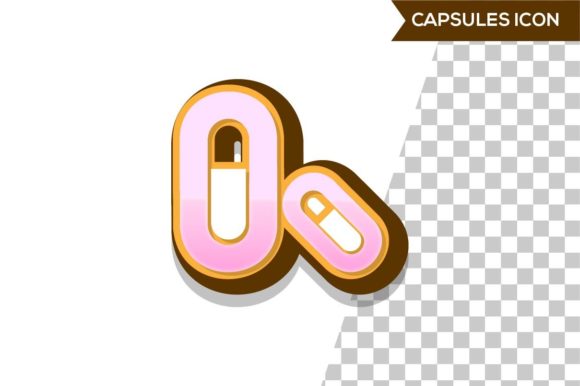
At its core, a 3D capsule icon combines the silhouette of a rounded pill—think of a medicine capsule or a lozenge—with carefully controlled three-dimensional rendering. The depth is usually subtle: a soft gradient, a gentle highlight, maybe a slight extrusion that gives the icon volume without making it look heavy. The palette tends toward saturated, friendly colors, though muted and monochrome versions are also common in more restrained brand systems.
What sets this style apart from earlier 3D icon trends is its restraint. During the early 2010s, skeuomorphic icons tried to mimic real-world materials with high fidelity—stitched leather, shiny metal, glossy glass. Those designs often felt dated within a few years. 3D capsules, by contrast, embrace a much lighter form of realism. They suggest physicality without imitating any specific object. You are not meant to mistake them for actual pills; you are meant to appreciate their rounded, almost edible quality as a design language.
This shift is meaningful. It signals that users no longer need icons to look like miniature photographs to understand their function. A capsule-shaped icon for a messaging app, for example, communicates approachability and speed purely through its form and lighting. The brain registers softness, accessibility, and ease of use before the eye even reads the icon’s symbol inside.
Why the Trend Is Gaining Real Traction
Several converging factors explain why 3D capsules icon design has moved from niche experimentation to a recognizable visual language used by startups, established software companies, and independent creators alike.
The Post-Flat Design Cycle
After nearly a decade of flat design dominance, both designers and users began craving a bit of depth again. Flat interfaces solved important problems—they loaded faster, scaled better, and felt modern—but they also created a sameness that made apps and websites hard to differentiate. The capsule form reintroduces depth and tactility without abandoning the clarity that flat design brought. It is a natural evolution rather than a rejection of what came before.
Responsive and Cross-Platform Consistency
Icons that rely on heavy textures or complex 3D meshes often break when resized or viewed on different screens. Capsules, with their simple geometry and controlled rendering, tend to scale gracefully. They look equally at home on a smartwatch face, a tablet toolbar, or a 4K monitor. This consistency matters for businesses that need a unified identity across devices without maintaining multiple icon sets.
Psychological Softness
There is also a psychological layer worth noting. The rounded, pill-like shape is inherently non-threatening. In an era where digital fatigue is real and users are bombarded with notifications, choices, and visual noise, an icon that feels gentle can improve the overall tone of an interface. This is particularly valuable in health, wellness, finance, and education apps, where trust and calmness are part of the user experience.
How 3D Capsules Fit Into Modern Workflows
For creators and businesses, adopting a 3D capsule icon style is not just about following a trend—it is about adapting to how audiences now perceive quality and care in digital products.
Consider the app onboarding process. When a user opens a new application for the first time, they form an impression within seconds based on visual polish. A set of consistent, well-lit capsule icons can convey that the product is modern, attention has been paid to details, and the experience will likely feel smooth. This is not about deception; it is about signaling competence through craft.
Marketers and bloggers have also found that capsule-style visuals perform well in social media thumbnails, email headers, and presentation slides. Their compact shape works naturally as a container for emojis, initial letters, or simple illustrations. When scrolling through a crowded feed, a colorful 3D capsule can catch the eye without feeling aggressive—a rare balance in attention-grabbing design.
Freelancers and independent creators, in particular, benefit from the accessibility of this style. Modern 3D software like Spline, Cinema 4D Lite, and even Blender with simple workflows allow someone with basic modeling skills to produce capsule icons in an afternoon. You do not need a team of illustrators or expensive rendering pipelines. The barrier to entry is low enough that a solo entrepreneur can create a cohesive icon set for their product without outsourcing.
Practical Implications for Different Audiences
Different groups will find different value in 3D capsules icon design. Here is how the style translates into real, day-to-day usefulness depending on your role.
For Designers and Creative Professionals
If you work in UI/UX, branding, or visual design, adding capsule icons to your toolkit gives you a flexible option for projects that need warmth without childishness. They work well for action buttons, empty states, navigation menus, and feature highlights. Because the shape is inherently neutral, you can place almost any symbol inside—a heart, a gear, a cloud, a person—and it will read clearly. The key is maintaining consistent lighting, shadow direction, and corner radius across the entire set.
A practical recommendation: start by defining a strict grid and a light source angle. Use two or three capsule variations—a full solid capsule, an outlined capsule, and a filled one with a symbol cutout—and see how far you can stretch those three variants across your interface before introducing new shapes. Restraint often yields a more professional result than variety.
For Business Owners and Marketers
If you are responsible for a brand’s digital presence, 3D capsule icons can differentiate your product in a crowded market. Many businesses still rely on generic flat icons or overly complex illustrations. A switch to a unified capsule system can make your website, app, or social media assets feel cohesive and intentional. It signals that you care about the user’s visual experience, which indirectly builds trust.
That said, avoid the temptation to overuse the style. Capsule icons are most effective when applied consistently to a specific layer of your interface—for example, primary action items or category headers—while leaving other elements simpler. Too many 3D elements competing for attention can quickly look messy.
For Educators and Bloggers
If you create tutorials, courses, or written content around design, the capsule trend offers a rich topic for demonstration. Teaching someone to build a simple capsule icon in a 3D tool is a manageable project that yields immediate, satisfying results. It also naturally introduces broader concepts like lighting, material properties, and export optimization. Many learners find the capsule form less intimidating than full character modeling or complex product renders, making it an excellent entry point into 3D design.
For Curious Readers and Hobbyists
Even if you are not a professional designer, understanding why certain visuals feel good can help you make better choices in your own projects—whether you are building a personal website, designing a presentation, or just organizing your digital files. The capsule shape is not magic; it works because it combines the familiarity of a real-world object with the cleanliness of digital geometry. You can experiment with it in free tools like Figma (using gradients and rounded corners to simulate 3D) or in beginner-friendly 3D apps. The learning curve is gentle enough that a single weekend afternoon can get you from zero to a finished icon set.
How the Style Has Evolved
It is worth noting that 3D capsules icon design did not appear out of nowhere. Early traces can be seen in material design’s use of rounded shapes and subtle elevation, and in the popularity of the neumorphism trend, which used soft shadows to create depth on pill-shaped buttons. Neumorphism proved too impractical for most interfaces because it created low contrast and accessibility issues. But it paved the way for a more controlled approach. Capsule icons took the best part of neumorphism—the soft, tactile quality—and dropped the worst—the poor readability and lack of clear boundaries.
Today’s capsule icons also benefit from better rendering tools. Real-time 3D engines and vector editing software now handle gradients, transparency, and lighting with far more precision than even five years ago. This means icons can look 3D while remaining relatively small in file size, which matters for web performance and mobile data usage.
Another evolution is the move toward dynamic icons. Some designers are now experimenting with capsule icons that shift color or lighting based on user interaction, dark mode, or time of day. This is still early, but it points to a future where icon design is not static but responds contextually to the user’s environment.
Recommendations for Getting Started
If you want to explore 3D capsules icon design for your own work, here are a few grounded steps that avoid unnecessary complexity.
- Start with sketches or simple vector shapes. Before opening any 3D software, define the symbols you want to place inside the capsule. Clear symbols will keep your icons readable even after adding depth.
- Maintain a consistent corner radius. The capsule’s defining feature is its rounded end. If your capsules have slightly different curvatures across the set, the inconsistency will be immediately noticeable. Lock that radius early.
- Use a single light source. Whether your icons look lit from the top left or the top right, keep that direction fixed. It creates a visual rhythm that users perceive as cohesive, even if they do not consciously analyze it.
- Export with transparent backgrounds. Capsule icons often live on colored or gradient backgrounds. A clean PNG with transparency gives you maximum flexibility in placement.
- Test at small sizes. An icon that looks gorgeous at 200 by 200 pixels may lose clarity at 32 by 32. Resize your final icons and check that the symbol inside remains legible. If it does not, simplify the symbol rather than enlarging the capsule.
Looking Ahead Without Hype
No design style lasts forever, and 3D capsules icon design will eventually evolve into something else or become so standard that we stop noticing it as a trend. But for the current moment, it fills a genuine need: it gives digital products a human, tactile quality without sacrificing the efficiency and clarity that modern users expect. Whether you are designing a fitness app, building a brand identity, or simply exploring a new creative skill, this style offers a practical, visually rewarding path forward.
The capsule shape is not a revolution. It is a refinement. And sometimes, that is exactly what a crowded visual landscape needs—a small, thoughtful improvement that makes everyday interactions a little more pleasant.