The Evolution of 3D Home Icon Design: A Modern Visual Language for Digital Spaces
In the crowded landscape of digital interfaces, standing out requires more than a flat vector. Today, 3D Home Icon Design has emerged as a distinct visual dialect—one that communicates warmth, stability, and modern sophistication. Professionals across UI/UX, branding, and product development are rediscovering the power of a dimensional home symbol, not as a nostalgic throwback, but as a strategic tool for engagement and differentiation. This article explores what 3D Home Icon Design really means, why it matters now, and how it fits into the evolving expectations of users and markets alike.
Defining 3D Home Icon Design
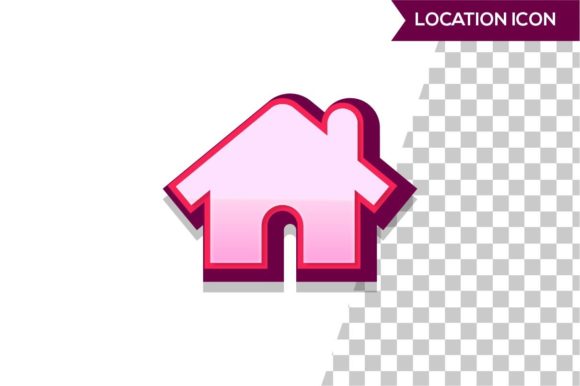
At its core, 3D Home Icon Design refers to creating a three-dimensional representation of a house or home icon using depth, lighting, materials, and perspective. Unlike flat or outline icons, a 3D home icon occupies volume. It might cast shadows, reflect light, or rotate interactively. This approach borrows principles from industrial design, architecture visualization, and game asset creation, but applies them to the micro-interactions of everyday apps and websites.
These icons are not merely decorative. In modern interfaces, a thoughtfully crafted 3D home icon can serve as a primary navigation element, a brand logomark, or an onboarding focal point. For example, in a real estate platform, a 3D Home Icon Design can instantly convey “property,” “living space,” or “dashboard” with a tactile quality that a flat icon cannot match. The technique spans from subtle bevels to fully rendered isometric structures, depending on context and brand tone.
From Flat to Dimensional: A Natural Progression
The shift toward 3D icons is part of a broader industry movement toward richer, more immersive visuals. After years of flat design dominance, designers and users alike began craving depth and personality. Neumorphism, glassmorphism, and now 3D iconography all represent attempts to reintroduce physicality without sacrificing clarity. The home icon, being one of the most universally recognized symbols, becomes a natural candidate for this treatment. It feels instinctively familiar, so even a stylized 3D version remains readable while adding a layer of emotional resonance.
Technological advances have also lowered barriers. Tools like Spline, Blender, and Adobe Dimension now allow designers to create 3D assets quickly, export them as lightweight SVGs or GLB files, and integrate them into responsive websites. This democratization means that 3D Home Icon Design is no longer reserved for AAA games or high-budget marketing campaigns; it is accessible to freelancers, startups, and in-house creative teams.
Why the Market Is Paying Attention
Several converging trends explain the rising interest in 3D home iconography.
1. User Expectations for Digital Comfort
As remote work and digital living become permanent fixtures, users seek interfaces that feel less sterile and more human. A 3D Home Icon Design evokes a sense of shelter, reliability, and personal space. When a banking app or a productivity tool uses a dimensional home icon for its dashboard, it subtly signals “this is your safe, private place.” This psychological association is powerful. In user research, participants often describe 3D icons as “friendly,” “premium,” and “inviting” compared to flat alternatives.
2. Brand Differentiation in a Saturated Market
With thousands of apps competing for the same screen space, a unique home icon can be a differentiating factor. Brands that adopt a distinctive 3D treatment—whether through custom lighting, a signature material (like frosted glass or brushed metal), or an animated entrance—create a memorable first impression. For instance, a prop-tech startup might use an isometric home icon with floating elements to convey innovation, while a heritage real estate brand might opt for a warm, shaded wood texture. 3D Home Icon Design offers a spectrum of expressive possibility that flat design struggles to match.
3. Preparation for Spatial Interfaces
Though we avoid speculation, it is observable that major platforms (iOS, Android, Web) are expanding support for spatial and augmented reality interactions. 3D Home Icon Design aligns naturally with this trajectory. When an icon already lives in three dimensions, transitioning it into an AR environment or a mixed-reality dashboard requires less rethinking. Companies investing in 3D icon systems today are future-proofing their visual language. The same icon used in a 2D app can be reused in a VR lobby or a 3D website hero section with minimal adaptation.
UI Navigation and Dashboard Entry Points
The most common usage remains the “home” button in mobile apps and web dashboards. A well-executed 3D Home Icon Design can transform a utilitarian back-to-home action into a delightful micro-interaction. Consider a task management tool: when a user taps the 3D home icon, it could animate with a subtle wobble or a rotating door effect, reinforcing the sense of “returning home.” Products like Notion and Figma already use playful icon animations, and a 3D home icon fits that trend perfectly.
E‑commerce and Real Estate Previews
In e‑commerce, a home icon is often used for the “furniture” or “living room” category. A 3D representation can show product thumbnails in context. For example, an online furniture store might use a 3D Home Icon Design as a category marker that, when hovered, expands into a miniature room scene. This blends iconography with merchandising, creating a seamless browsing experience.
Brand Logos and Favicons
Startups and lifestyle brands frequently adopt the home symbol in their logotype. A 3D treatment gives the logo depth and a social media–friendly look. Even as a favicon, a small 3D home icon with a subtle shadow stands out among rows of flat tabs. The extra detail becomes a signature of quality.
Changing Workflows and Skillsets
The rise of 3D Home Icon Design is also reshaping how designers work. Traditional icon design focused on vector crispness and uniform stroke weights. Today, a 3D icon designer must understand lighting, material properties, perspective, and sometimes animation curves. This has led to new roles blending 3D artistry with UI design. Platforms like Spline now offer collaborative 3D editing directly in the browser, making it easier for teams to iterate on icons without leaving the design tool ecosystem.
For marketers and entrepreneurs, the implication is clear: investing in 3D iconography signals a brand that cares about craft. It also requires updated asset pipelines. A 3D Home Icon Design may need multiple export formats—PNG for static use, Lottie or GIF for animated, and GLTF for interactive 3D. This complexity is balanced by the payoff in user engagement metrics: higher click-through rates, longer dwell times, and improved brand recall have been reported in A/B tests comparing 3D to flat icons.
Connecting to Larger Developments
3D Home Icon Design sits at the intersection of several macro trends:
- Digital wellness: Icons that feel warm and dimensional contribute to a less stressful digital environment.
- Low-code / no-code: Tools that offer pre-made 3D icon libraries enable non-designers to incorporate 3D home icons into landing pages and apps, broadening adoption.
- Micro-interactions: The home icon is often the most-used element in an app; adding 3D depth makes that interaction feel more intentional and rewarding.
- Corporate branding: Enterprise software is moving away from cold, flat interfaces toward “consumerized” experiences that use 3D elements to reduce friction and boost employee satisfaction.
These connections are not speculative; they are visible today in products like Microsoft Teams (which uses 3D emotes) and Apple’s spatial audio icons. The home icon is simply the most emblematic candidate for this dimensional shift.
Considerations for Implementation
Adopting 3D Home Icon Design requires thoughtful execution. Overly complex or glossy icons can distract rather than guide. The best 3D home icons maintain clarity at small sizes—often sacrificing extreme detail for strong silhouette and recognizable key features like a roof, door, and windows. Designers should test icons across backgrounds and in different states (active, inactive, pressed) to ensure accessibility and contrast.
Performance is another factor. While modern web tech can handle lightweight 3D renders, developers should optimize file sizes. Using techniques like compressed textures, limited polygon counts, and SVG-to-CSS tricks can keep load times low. For static implementations, a well-rendered PNG might be all that is needed.
Finally, brand alignment matters. A playful, cartoonish 3D home icon suits a consumer app but may undercut trust for a legal services dashboard. Auditing the tone and context is essential. 3D Home Icon Design is versatile, but not one-size-fits-all.
Looking Ahead (Based on Current Trajectories)
Rather than forecasting unproven futures, we observe that major design systems—Google Material Design, Apple HIG, and Microsoft Fluent—are all introducing 3D elements into their guidelines. The home icon, as a core component of any interface, will inevitably receive deeper integration. We already see design communities sharing 3D home icon sets on platforms like Dribbble and Figma Community. The conversation is moving from “should we use 3D?” to “how can we use 3D home icons consistently across products?”
For professionals and creators, understanding 3D Home Icon Design is no longer a niche skill; it is part of a broader visual literacy essential for modern digital communication. Whether you are a freelancer pitching to clients or a marketer evaluating design assets, recognizing the strategic value of a dimensional home icon can set your work apart.
A Practical Takeaway
Start small. Replace one critical icon—likely the home icon—with a carefully crafted 3D version. Run an A/B test to measure user reaction. You may find that the simple addition of depth and light transforms not just the icon’s appearance, but the entire emotional tone of the interface. That is the quiet revolution of 3D Home Icon Design.
In summary, this design approach is more than a trend. It reflects a deeper human need for digital spaces that feel real, welcoming, and artfully constructed. By investing in a 3D Home Icon Design, professionals align their work with the direction users already expect—and the industry is already moving toward.
— Written for creators, entrepreneurs, and designers who see the icon not as a trivial graphic, but as a foundation for meaningful interaction.